
Elisa Cazzato PhD
I am committed to excellence in research through interdisciplinary exchanges, international experience, and well-informed translation of scientific knowledge
About me
I am a research fellow (RTDa) in Art History at the University of Naples Federico II.
I am currently leading a three-year project titled EPHEMER-ART: Tracing Artists and Practices of Ephemeral Art from Italy to Europe (1700–1880).
This research has received funding through the Italian Young Researchers 2024 grant.


My Book
Ignazio Degotti (1758-1824) was one of the most influential scenographers working in Paris during the Revolution and Empire. As peintre en chef at the Paris Opéra for more than two decades, he worked at the centre of an institution where visual spectacle became a powerful instrument of artistic innovation and political representation.
Drawing on extensive archival research in Italy and France, this book reconstructs Degotti’s career and situates his activity within the broader transformation of theatrical culture in the long eighteenth century. It shows how scenography functioned not merely as decoration but as a form of visual dramaturgy capable of structuring space, guiding the spectator’s gaze and giving political meaning to the performance.
Through case studies ranging from Revolutionary theatre to the grand operatic spectacles under Napoleon, the book reveals collaborative networks behind these performances. It also examines Degotti’s artistic relationships with figures such as Jacques-Louis David and the Greuze family, illuminating how sociability, friendship and artistic exchange shaped visual ideas in Napoleonic Paris.
By placing scenography at the centre of Enlightenment visual culture, this study offers a new perspective on spectacle, artistic collaboration and the politics of performance while highlighting one of the least studied scenographers of the period
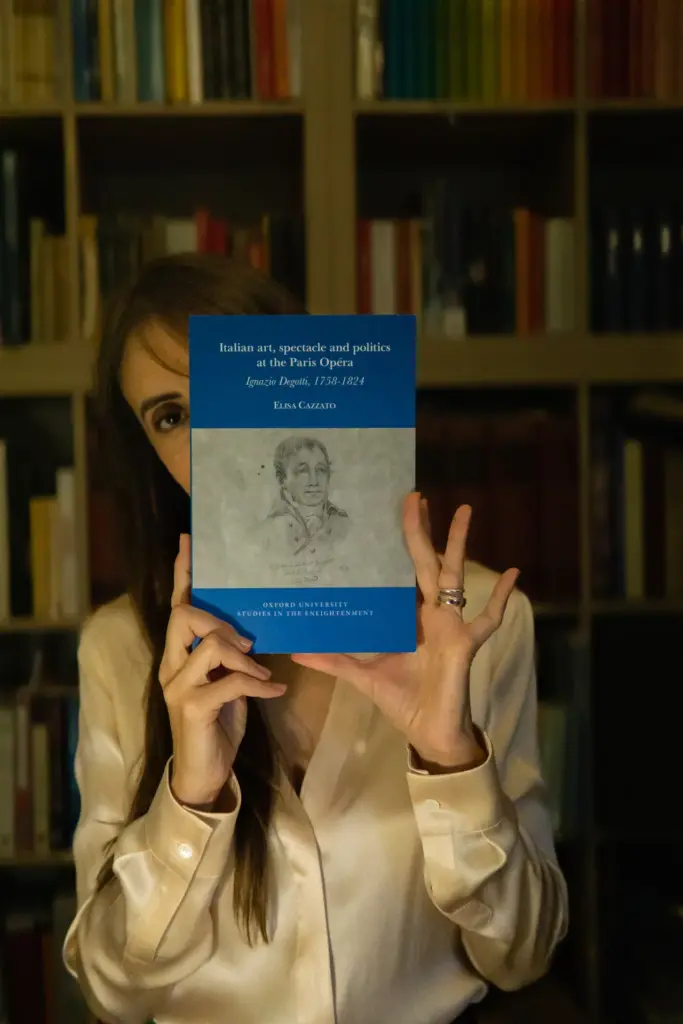
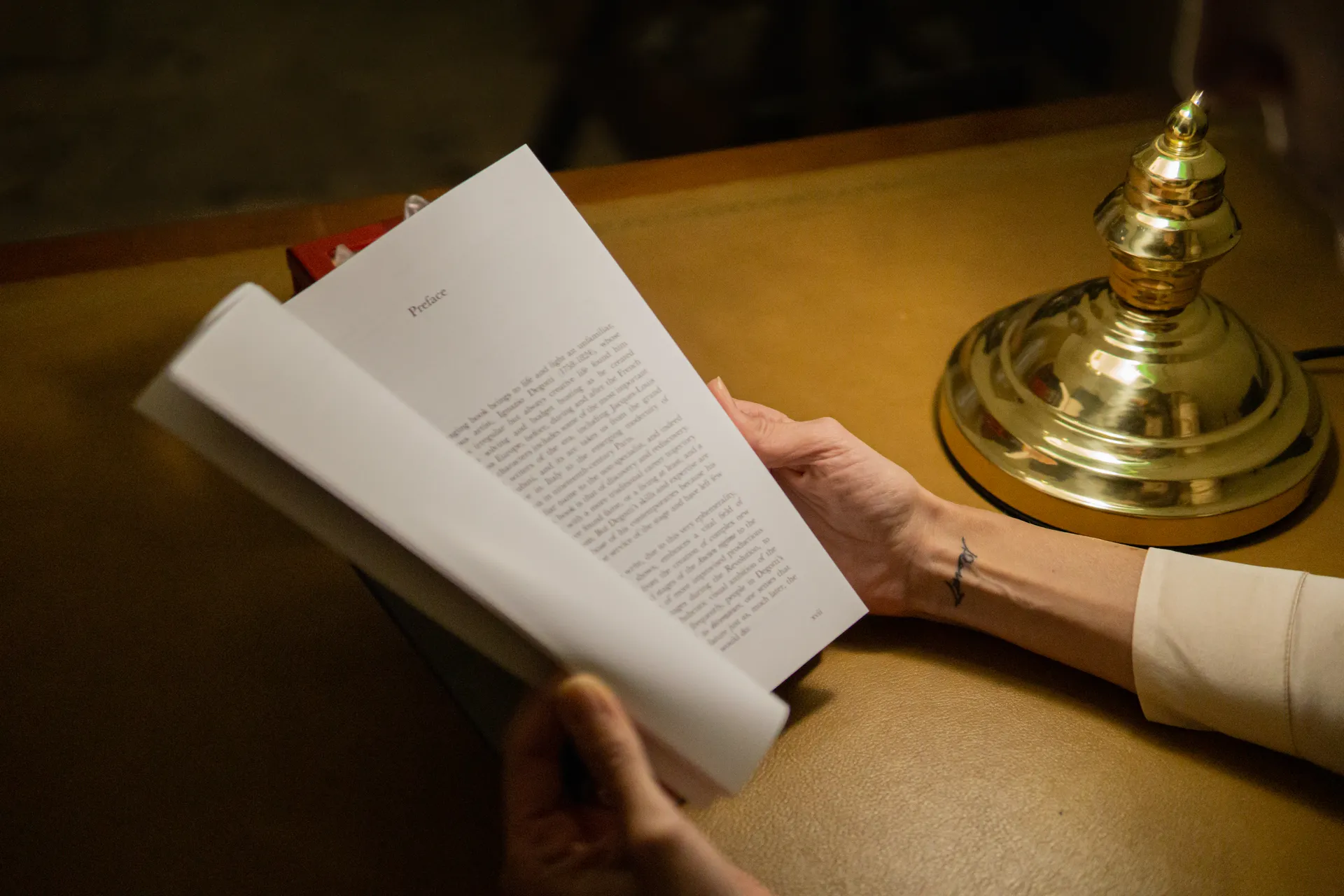
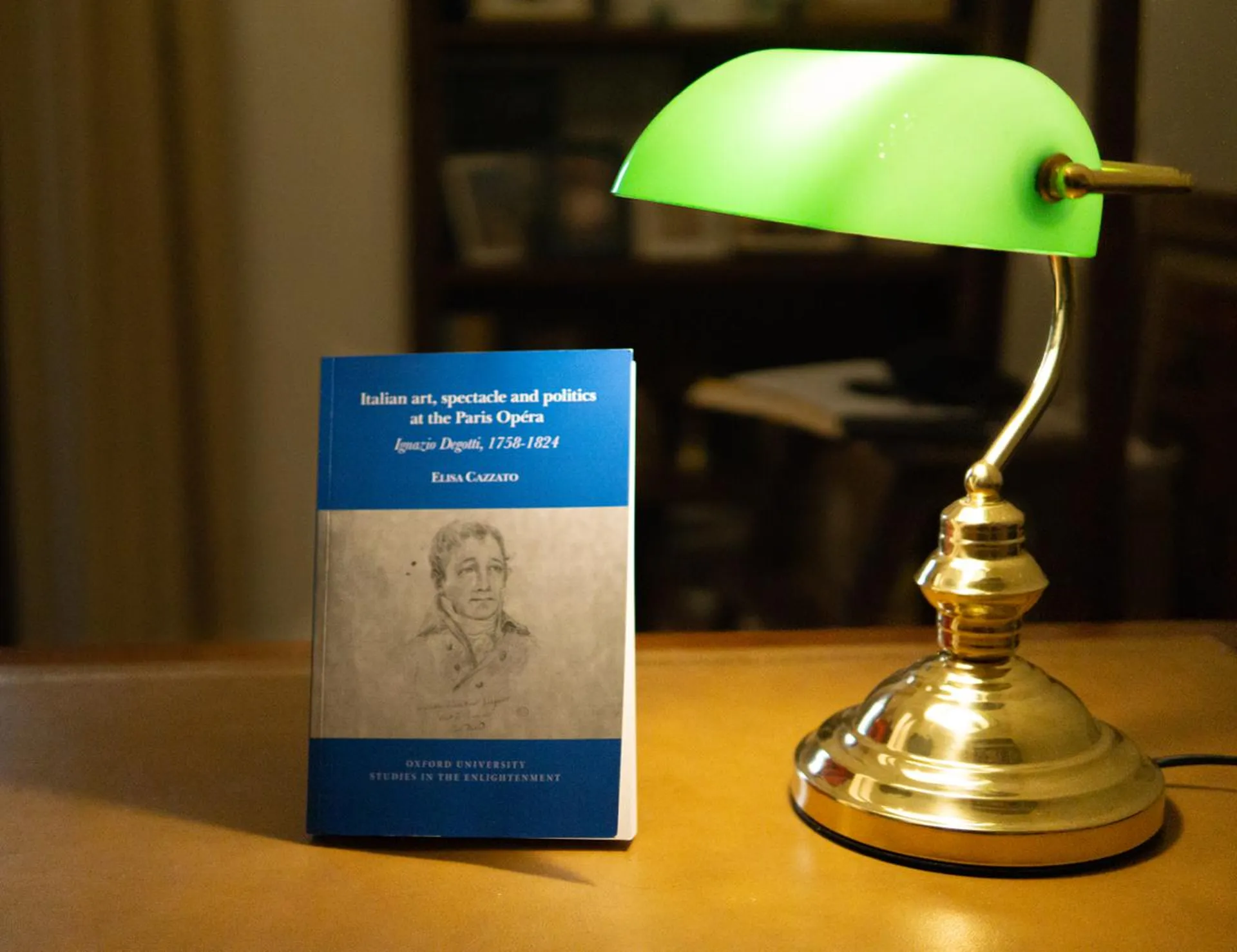
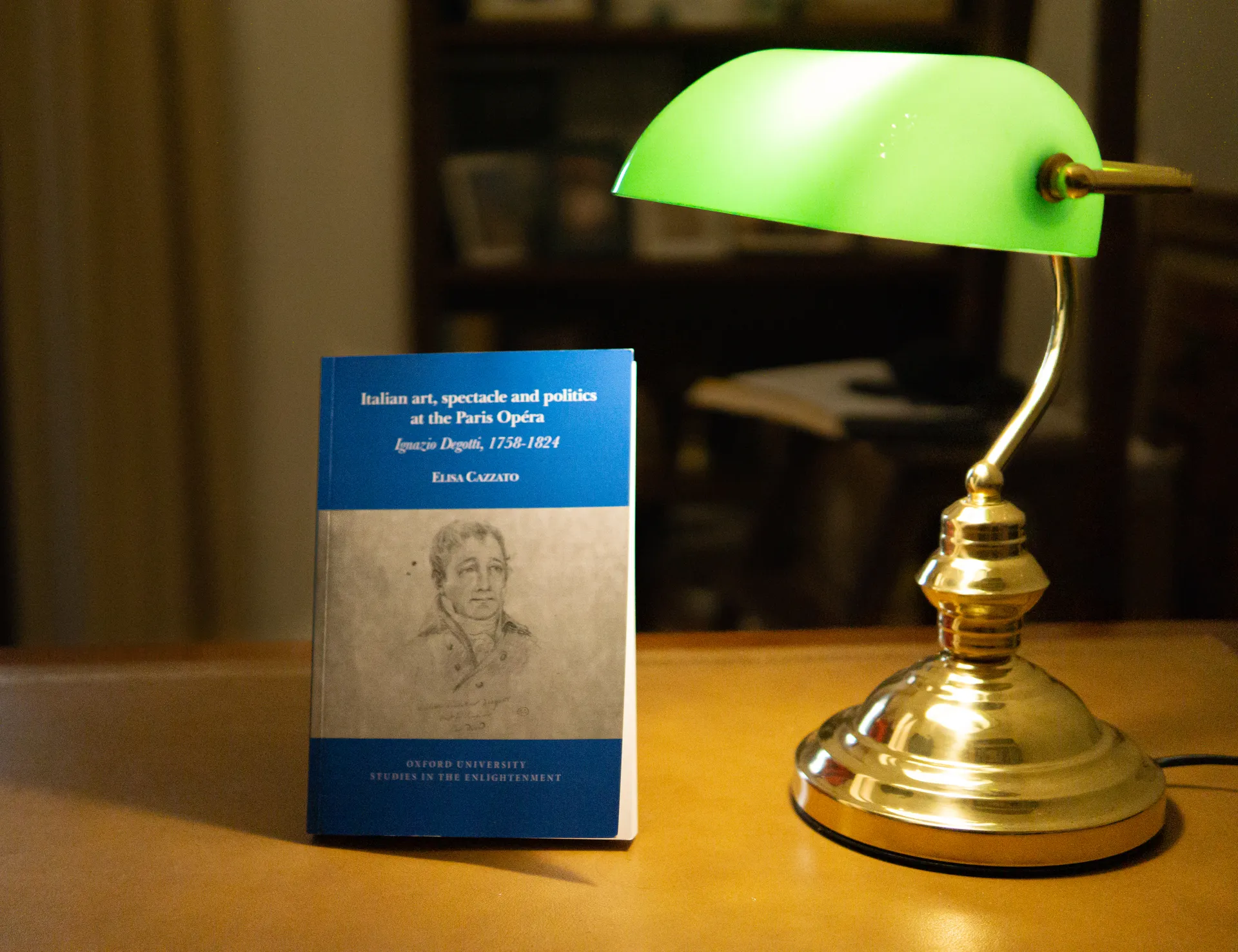
Table of content
| Preface |
| Opening the curtain: an introduction |
| Scenography as visual dramaturgy |
| The challenge of ephemerality |
| An interdisciplinary approach |
| Outline of the chapters |
| Chapter 1. Sceneography in the age of the Enlightenment |
| Setting the scene: scenography as an evolution of prospettiva, a Renaissance legacy |
| Seventeenth-century Italian paths: machinery and perspective as illusion |
| Diverging tastes: resisting change on seventeenth-century French stages |
| Key terms: Scénographie and Décoration, a lexical and Encyclopedic shift |
| Reform under the Enlightenment: the tableau as a spatial and emotional configuration of the stage |
| Chapter 2: Ignazio Degotti (1758-1824): the Italian milieu |
| The Degotti family in Turin: origins and background |
| Models of ambitions: the Galliari family |
| Knowledge of the Classics and Roman encounters |
| The establishment of a staging identity |
| Mapping the last Italian journey: Naples |
| Chapter 3: An Italian artist in Paris: works under the Revolution (1790-1797) |
| The power of hometown networks in a French environment |
| The experimental enterprise of the Théâtre de Monsieur: a Franco-Italian repertoire |
| A controversial example of pastiche: Le Retour aux isles des amis, ou le capitaine Cook (1790) |
| Lodoïska (1791): fire, scenography and Revolutionary resonance |
| Visual challenges and changing aesthetics: Eliza (1792) and Médée (1797) |
| Degotti at the Théâtre de la République: the exotic décor of Abufar ou la Famille Arabe (1795) |
| Chapter 4: Power and Spectacle at the Théâtre de l’Opéra. The Napoleonic years (1795-1810) |
| From monarchy to empire: the Opéra’s institutional shifts and theatrical infrastructure |
| A missed opportunity for a functional atelier de peinture (1795) |
| Scenographic tableau in the making |
| Between image and order: Degotti and the politics of theatrical production |
| Staging the myth of Rome: Le Triomphe de Trajan (1807) |
| Napoleon’s self-promotion: La Mort d’Adam (1809) |
| The tortuous path to marketing imperialism: Fernand Cortez (1809) |
| Chapter 5: Networks of the Napoleonic period |
| Domestic stages: collective ventures in private scenography |
| Standing together: Degotti and David |
| Intimate networks: Degotti, Louise-Gabrielle Greuze, and the private legacy |
| Chapter 6: Afterlives of a scenographer: restoration, transmission, and loss (1814-1825) |
| Familiar faces, familiar problems: Degotti’s continued battles at the Opéra |
| Exeunt Degotti: the final years |
| Transmitting light: Degotti’s influence on Daugerre |
| A quiet dispersal of an artist’s life: a brother’s role |
| Closing the curtain: a conclusion |
| Appendices |
SPECTACLE is a multidisciplinary investigation intersecting histories of culture, art, stage design, and theatre. It aims to define the cultural meaning of ‘spectacle’ and ‘spectacularity’ in France and in a selection of European capitals in the long 18th century. This is being established through research on the ephemeral constructions standing behind the process of spectacle-making (e.g. stage design, firework technology, circus performance). Specifically, this project investigates how Italian artists from different backgrounds provided key contributions to French and European spectacle broadly conceived (e.g. public and private performances, propaganda events). My research is also addressing questions on when and how genders, races, and forms of disabilities were used as forms of ‘ephemeral entertainment’, and how much these forms of spectacle created stereotypes that are still present in current times and society.
This project has received funding from the European Union’s Horizon 2020 programme under the Marie Sklodowska-Curie Grant Agreement no 893106.

My background
After receiving my MA in Art History and Criticism at the University of Milan under the supervision of Professor Fernando Mazzocca and with a thesis on the relationship between art and stage design, I moved to Australia. In 2018, I completed her PhD in Art History at The University of Sydney, fully funded by The University of Sydney International Fellowship, with a dissertation on the life and career of the stage designer Ignazio Degotti (1758-1824), supervised by Professor Mark Ledbury. In the same year, I was awarded a residential fellowship at the Fondazione Giorgio Cini in Venice (Centro Vittore Branca).
I am also a former Marie Skłodowska-Curie Global Fellow at Ca’ Foscari University of Venice. For my project SPECTACLE I was a visiting scholar at the CELLF of the Université Sorbonne and in the Department of Art History at the New York University. Here, I assisted Meredith Martin on the dance production of the Ballet de Porcelaines.
In 2023, I organised the international conference Here Today, Gone Tomorrow? Ephemerality and Materiality in France in the Long Eighteenth Century, for which I also created a series of podcasts co-produced with Radio Ca’ Foscari. My publications include articles in the peer-review journals Studi Francesi, Dance Research, Humanities Research Journal, RIEF, and Status Quaestions. I am currently writing my first book on the life and career of Ignazio Degotti.
I was awarded a PhD in Art History from The University of Sydney, with a thesis titled An Italian Artist in Paris: the life and career of Ignazio Degotti (1758-1824). My thesis was supervised by Prof. Mark Ledbury and was entirely funded by the University of Sydney international fellowship.
I am also a former Marie Skłodowska-Curie Global Fellow at Ca’ Foscari University of Venice. For my project SPECTACLE I was a visiting scholar at the CELLF of the Université Sorbonne and in the Department of Art History at the New York University. Here, I assisted Meredith Martin on the dance production of the Ballet de Porcelaines.
In 2023, I organised the international conference Here Today, Gone Tomorrow? Ephemerality and Materiality in France in the Long Eighteenth Century, for which I also created a series of podcasts co-produced with Radio Ca’ Foscari. My publications include articles in the peer-review journals Studi Francesi, Dance Research, Humanities Research Journal, RIEF, and Status Quaestions. I am currently writing my first book on the life and career of Ignazio Degotti.